
Woody Notes Explained: Sandalwood, Cedarwood & Oud
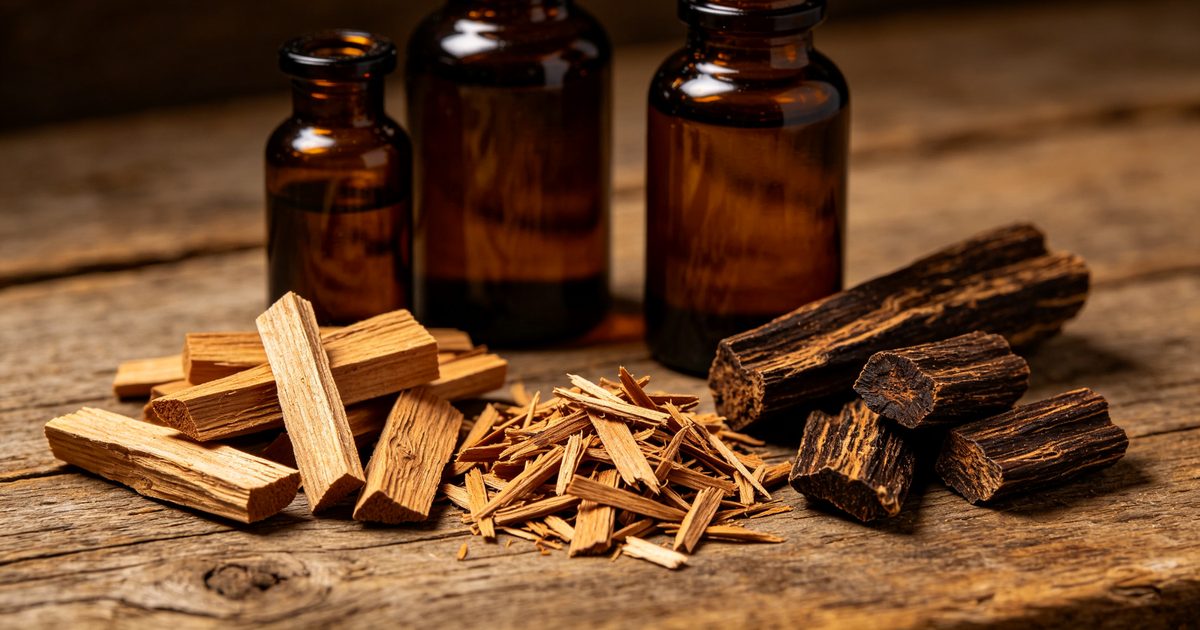
Woody notes are the skeleton of modern perfumery. Strip them out and most fragrances collapse within an hour. But "woody" covers a range wide enough that lumping sandalwood, cedarwood and oud together is like calling ice cream, yoghurt and aged cheese the same food group. One is creamy, one is dry, one is animalic — and each demands different handling, a different budget, and a different place in the formula.
Where the Warmth Actually Comes From
Warmth in a woody perfume is not a single molecule; it is three effects stacking up.
Physics. Wood materials are dominated by heavy molecules — sesquiterpenes and sesquiterpenols such as santalol, cedrol and vetiverol. They evaporate slowly, which means they do not flash off the skin the way citrus does. They sit close and release continuously, and the scent cloud they build is dense rather than airy. That density reads as warmth.
Chemistry. Slow-evaporating molecules also tend to be round rather than sharp. Compare the bite of limonene with the softness of santalol and you can feel the difference on a blotter: one prickles, the other spreads.
Association. Dry wood, pencil shavings, sawdust, incense smoke, a fireside — humans have strong learned associations with all of them, and perfumers lean on that. Add balsamic materials like vanillin, benzoin, labdanum or tonka, and the accord tips from "wood" into "warm wood", which is where most cold-weather bestsellers live.
Modern perfumery adds a fourth layer: transparent woods. Molecules like ISO E Super, Ambroxan, Cashmeran and Javanol give a velvety, radioactively diffusive woodiness that reads as warmth without any sweetness at all.
The Three Core Woods, Compared
| Wood | Source | Character | Typical Use Level | Cost |
|---|---|---|---|---|
| Sandalwood | Heartwood of Santalum album / spicatum, steam-distilled | Creamy, milky, softly sweet, rounded | 1–5% as support; 5–30% in a wood-centred formula | High (natural); low–moderate (synthetic santalols) |
| Cedarwood (Virginia) | Juniperus virginiana, steam-distilled | Dry pencil shavings, sawdust, faintly smoky | 2–15% | Low |
| Cedarwood (Atlas) | Cedrus atlantica, steam-distilled | Softer, sweeter, slightly leathery and camphoraceous | 2–10% | Low–moderate |
| Oud (agarwood) | Infected Aquilaria heartwood, steam-distilled | Smoky, leathery, animalic, sweet-balsamic, "barnyard" facet | 0.1–2% natural; accord can run higher | Very high (natural); low–moderate (synthetic accord) |
Scroll sideways to see the full table.
Sandalwood: Cream, Not Timber
Real sandalwood smells less like a forest and more like warm milk. That creaminess comes mainly from alpha- and beta-santalol, and no single synthetic molecule reproduces it completely — which is why modern formulas layer a natural oil with two or three santalol-mimicking materials rather than substituting one for the other. Sustainability is the unavoidable part of this story: wild Indian sandalwood was loved nearly to death, and if a seller offers "pure Mysore" at a bargain price, it is not Mysore. Our full sandalwood profile covers the natural-versus-synthetic question and the paperwork worth requesting from suppliers.
Cedarwood: Dry, Honest, Cheap
Cedarwood is the workhorse. Virginia cedarwood (Juniperus virginiana) is the classic pencil-shaving note — dry, faintly smoky, a little sharp at the edges, with thujopsene doing most of the work. Texas cedarwood is smokier still. Atlas cedar (Cedrus atlantica) is softer and rounder, with a slightly leathery, camphoraceous top that some people love and others cannot stand. Himalayan cedar is the sweetest and most balsamic of the group.
Because it is inexpensive and structurally useful, cedarwood is the wood to learn on. It holds a lavender-and-coumarin fougère together, gives body to a citrus cologne that would otherwise vanish in twenty minutes, and pairs with vetiver and patchouli for the standard masculine base.
Oud: The Most Misunderstood Note in Perfumery
Genuine oud (agarwood) is not a wood oil in the ordinary sense. The fragrance forms in Aquilaria heartwood as a defence response to injury and fungal infection; healthy trees produce almost nothing. That resinous, infected wood is distilled into an oil that smells smoky, leathery, animalic, sweet-balsamic and — at the challenging end — faecal. Prices for high-grade material run into thousands of dollars per kilo.
So the oud in a $60 bottle is an accord. Typically that means a synthetic agarwood base (Oud Synth 15 and similar), leathery and smoky materials, something peppery or saffron-like, and a trace of natural oil if the budget allows. That is not a scam; it is how the industry works. What matters is whether the accord was built well. Bad oud smells like burning plastic; good oud smells dark, sweet, and just slightly dirty in a way that keeps your nose interested. If you want to understand the real thing before you spend money, our supplier guide explains what documentation a legitimate agarwood seller should provide.
How They Behave in Masculine and Unisex Fragrances
The old rule — woods for men, florals for women — stopped being useful around the time unisex perfumery became the fastest-growing part of the market. What actually matters is which wood you pick and what you put next to it.
- Classic masculine — cedarwood or vetiver under lavender and coumarin, with oakmoss or a modern moss replacement. Dry, barbershop-adjacent, still the backbone of a huge share of men's releases.
- Modern masculine — the "blue" and amber-woody style: ISO E Super, Ambroxan and Cashmeran with cedar, vetiver and a bright citrus top. Diffusive, clean, and engineered to project.
- Unisex woody — sandalwood is the safest bridge. Paired with rose or jasmine it turns neither sweet nor harsh; paired with fig, iris or tea notes it reads contemporary and gender-neutral.
- Unisex statement — oud with rose or saffron. Keep the oud under roughly 1–2% of the concentrate or it will dominate the rose completely within a few weeks of maceration.
- Woody-floral feminine — sandalwood or Cashmeran under a white floral, which is how you make jasmine wearable in a cool climate.
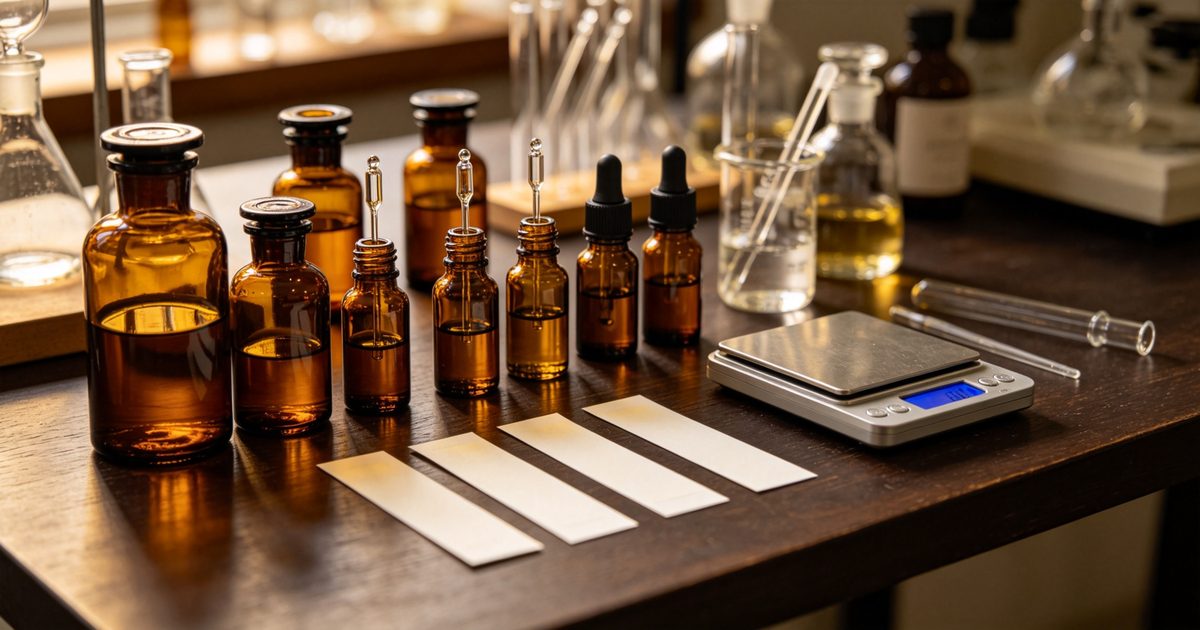
Atlas Cedarwood Essential Oil
Cheap, honest and endlessly useful: it teaches you what a dry base note does, and it survives beginner mistakes that would ruin a sandalwood formula. Look for the botanical name Cedrus atlantica on the label, and request the GC/MS report.
Cold-Weather Room Diffusion
Woods are the natural choice for autumn and winter spaces, mostly because they are heavy enough to survive a heated room. A few practical settings:
- Intermittent, not continuous. Run a diffuser for 20–30 minutes, then let the room rest for an hour. Continuous diffusion numbs your own nose within about fifteen minutes and wastes oil.
- Dosage. For an ultrasonic diffuser, 3–5 drops of a woody blend per 100 ml of water is plenty; woods are strong and cloying in a closed room. For a reed diffuser, aim for roughly 15–25% fragrance in a carrier designed for reeds.
- Equipment matters. Ultrasonic diffusers are quiet and add humidity but dilute the oil heavily. Nebulisers give the truest scent with no heat or water but use oil much faster — reserve them for short sessions with a good oud.
Three blends worth trying (parts, for a concentrate you then dose as above):
- Fireside study — cedarwood 40, sweet orange 25, vetiver 15, clove bud 2, benzoin 18. Dry, smoky, faintly sweet; the safest crowd-pleaser of the three.
- Creamy winter — sandalwood 35, vanilla or vanillin 10, cardamom 5, tonka 10, cedarwood 40. Warm without becoming a bakery.
- Evening oud — oud accord 3, rose absolute 12, saffron 2, sandalwood 45, labdanum 15, cedarwood 23. Low oud, high wood; this is the version guests will actually compliment.
Ventilate the room, keep sessions short, and keep cats, birds and anyone with respiratory sensitivity out of the direct mist. If you are scenting a guest-facing space rather than your own living room, our signature scent guide covers the intensity and safety choices that matter commercially. Candle makers should note that heavy woods behave very differently in wax — see our soy candle guide for load rates and cure times.
Frequently Asked Questions
Why do woody notes smell warm?
Three things stack up. Wood molecules are heavy and evaporate slowly, so they sit close to the skin and release continuously instead of flashing off. Their chemistry is dominated by sesquiterpenes and sesquiterpenols such as santalol and cedrol, which read as soft, rounded and tactile rather than sharp. And most woody perfumes are rounded out with balsamic and resinous materials like vanilla, benzoin and labdanum, which add the sweet density we read as warmth.
Is the oud in my perfume real agarwood?
Almost certainly not, and that is normal. Genuine agarwood oil is distilled from infected Aquilaria heartwood and can cost thousands of dollars per kilo, so most commercial fragrances use an oud accord built from synthetics such as Oud Synth 15, agarwood bases, and peppery or leathery materials, sometimes with a trace of natural oil for authenticity. Well-built accords smell convincing; badly built ones smell like burnt plastic.
Which woody note should a beginner buy first?
Cedarwood. It is inexpensive, forgiving in a blend, and instantly recognisable, which makes it a good teacher for how a base note behaves. Australian sandalwood is the best second purchase because it shows you the creamy side of wood. Save oud for later, once you can smell the difference between a dry wood and a resinous one.
Can I diffuse woody oils around cats and dogs?
Be careful, especially with cats, which lack the liver enzyme needed to clear many aromatic compounds and are sensitive to essential oils in general. Diffuse in a room the pet can leave, keep sessions short, run it intermittently rather than continuously, and never apply oils to an animal directly. Birds are more sensitive still. If your vet has concerns, skip the diffuser and use a passive option such as a sealed sachet.
The Bottom Line
Cedarwood gives you structure, sandalwood gives you cream, oud gives you drama — and the warmth you are chasing comes from slow evaporation plus the balsamic materials you pair them with. Start with cedarwood because it is cheap and teaches fast, learn sandalwood next because it is the one wood that flatters florals, and treat oud as a seasoning rather than a foundation. From here, read the sandalwood profile, compare against floral notes and oriental and spicy notes, or start building with our beginner's formulation guide.
Related Articles
This post may contain affiliate links. If you click and buy, we may earn a small commission at no extra cost to you.