
Vanillin in Perfumery: Uses, Safety & Blending Guide
If you have ever smelled a vanilla cupcake candle, a cozy amber perfume, or the sweet drydown of a bestselling gourmand, you have met vanillin. It is arguably the most important sweet material in all of fragrance: cheap, reliable, and instantly recognizable. Yet it is also one of the most misunderstood — especially by candle and soap makers who learn about its dark side only after a batch turns brown.
This profile covers what vanillin actually is, how professional perfumers dose it, the safety framework around it, and the blending partners that make it sing.
What Is Vanillin?
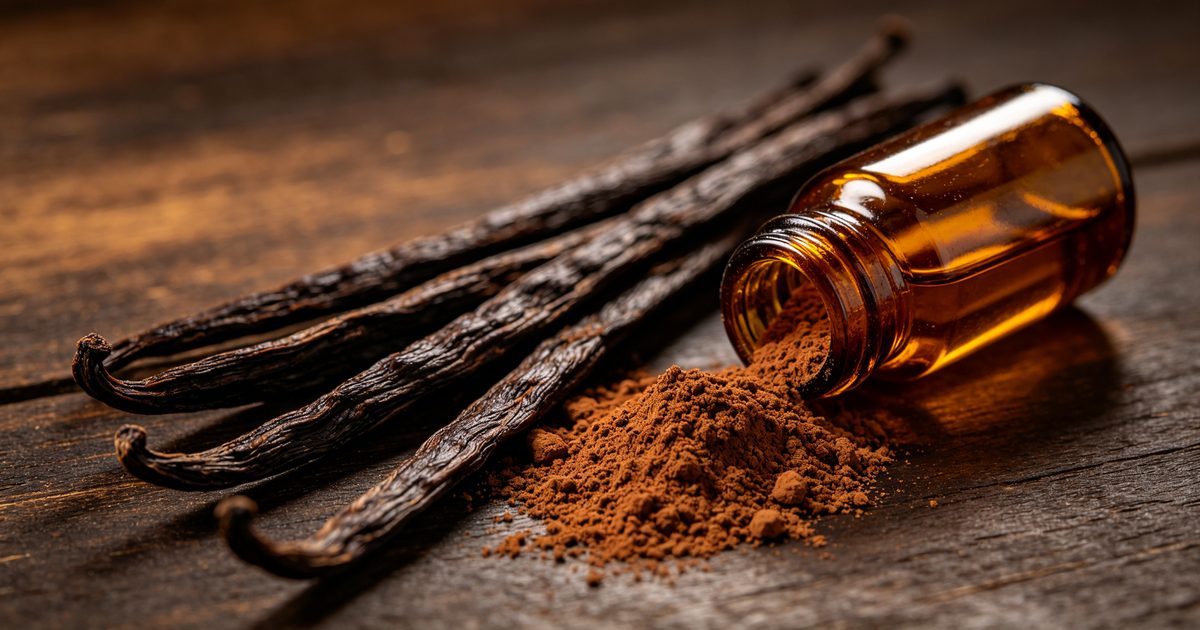
Vanillin is a single aromatic aldehyde — the molecule most responsible for the smell of cured vanilla beans. Fresh vanilla pods contain almost no vanillin; it forms during the months-long curing and fermentation process, eventually reaching roughly 1–3% of the bean's weight.
Here is the part that surprises beginners: although vanillin occurs in nature, the overwhelming majority used in fragrance and flavor is synthetic. It is manufactured at massive scale from guaiacol, from lignin (a paper-industry byproduct), or increasingly through biotech fermentation. The molecule is chemically identical regardless of origin — only the price and the marketing story differ.
In the bottle you buy, vanillin is a white to off-white crystalline powder that dissolves readily in alcohol, DPG, and most common fragrance solvents. Its smell is sweet, creamy, warm, and balsamic, with a light powdery edge — softer and less aggressive than its stronger cousin, ethyl vanillin.
How Perfumers Use Vanillin
Vanillin is a base note. Perfumers reach for it to:
- Sweeten and round a formula — it smooths harsh edges on florals, woods, and spices.
- Build amber and gourmand accords — with benzoin, labdanum, and coumarin-type materials, vanillin forms the backbone of the entire amber family.
- Add longevity — as a heavy, slow-evaporating molecule, it anchors lighter notes and stretches the drydown.
- Mask base odors — functional products like detergents and cleaners use vanillin-type sweetness to cover unpleasant chemical backgrounds.
Typical dosage: in fine fragrance, vanillin usually sits between about 0.5% and 5% of the concentrate. Gourmand styles can push higher. In functional fragrance (soaps, candles, home care), it often appears as part of a vanilla-type fragrance oil at much larger effective levels.
Two practical warnings from real production floors:
- Discoloration. Vanillin oxidizes and turns white cold-process soap, melt-and-pour bases, and pale candle wax tan to dark brown over weeks. If you make candles or soap, either budget for a vanilla color stabilizer, pick vanillin-free fragrance oils, or embrace the color shift in your design. Our guides to fragrance oils for candle making and scented soy candles cover this in practice.
- Dominance. Vanillin flattens blends if overdosed. Add it in small steps, and always re-evaluate after the blend has rested for at least 24–48 hours.
Safety & IFRA
Vanillin has a long history of use in flavor and fragrance, but "natural-sounding" does not mean "use as much as you like." The International Fragrance Association (IFRA) regulates materials according to product category — a leave-on skin product (like perfume) is treated very differently from a rinse-off product (like shampoo) or a non-skin product (like a candle). Maximum permitted levels for a given material can differ sharply between categories.
Rather than quoting numbers that change between IFRA amendments, the professional habit is simple: consult the current IFRA Standards and your supplier's documentation. Reputable suppliers provide an IFRA conformity certificate for every fragrance oil and aroma chemical, listing the maximum use level per category. Keep those certificates on file — if you ever sell products, they are your compliance backbone. Our supplier guide explains what documentation to request. As with any concentrated material, patch-test finished formulas and work with adequate ventilation.
Vanilla Fragrance Oil (Candle & Soap Grade)
A workhorse vanilla built on vanillin and ethyl vanillin, pre-blended for wax and soap bases. Check the IFRA certificate and ask the seller about discoloration performance before ordering in bulk.
Blending Tips
Vanillin is a team player — its real magic shows in combination:
- Benzoin, tonka/coumarin, labdanum — the classic amber accord; vanillin supplies the sweet top of the base.
- Sandalwood and patchouli — creamy, warm woods; the foundation of countless oriental perfumes.
- Ethyl maltol — the "cotton candy" molecule; together they define modern gourmand. Use restraint — this pair gets cloying fast.
- Jasmine and orange blossom — a touch of vanillin turns white florals lush and almost edible.
- Bergamot and other citrus — brightness on top keeps the sweetness from feeling heavy.
- Musks and ambroxan — clean, modern diffusion that carries the vanilla for hours.
Beginner formula exercise: dissolve vanillin at 10% in DPG, then add it dropwise to a simple sandalwood-musk base. You will smell exactly why perfumers call it "the softener."
Frequently Asked Questions
Is vanillin natural or synthetic?
Both exist. Vanillin does occur naturally in cured vanilla beans at roughly one to three percent, but the vast majority of vanillin used in fragrance and flavor is synthetic, produced from guaiacol, lignin, or fermentation. The molecule itself is chemically identical either way.
Does vanillin discolor soap and candles?
Yes. Vanillin oxidizes over time and turns white cold-process soap, melt-and-pour bases, and pale candle wax tan, beige, or even dark brown. Formulators either use a vanilla color stabilizer, choose vanillin-free fragrance oils, or design the product around the color change.
What is the difference between vanillin and ethyl vanillin?
Ethyl vanillin is a related synthetic molecule with a very similar but creamier, more intense vanilla character. It is roughly two to four times stronger than vanillin, so you need less of it. Ethyl vanillin also discolors soap and wax just as readily.
How much vanillin should I use in a perfume?
In fine fragrance, vanillin typically sits between about 0.5% and 5% of the concentrate, with gourmand styles sometimes going higher. Start at 0.5% or less, let the blend rest, and increase slowly — vanillin easily dominates a formula.
The Bottom Line
Vanillin is the quiet workhorse behind a huge share of the world's sweet fragrances — affordable, powerful, and easy to overdose. Respect its strength, plan for its discoloration in soap and wax, and pair it with woods, resins, and musks rather than leaning on it alone. To put it into practice, follow our beginner's formulation guide, or browse the full Ingredient Encyclopedia.
Related Articles
This post may contain affiliate links. If you click and buy, we may earn a small commission at no extra cost to you.