
Oriental & Spicy Notes: Cinnamon, Clove & Vanilla
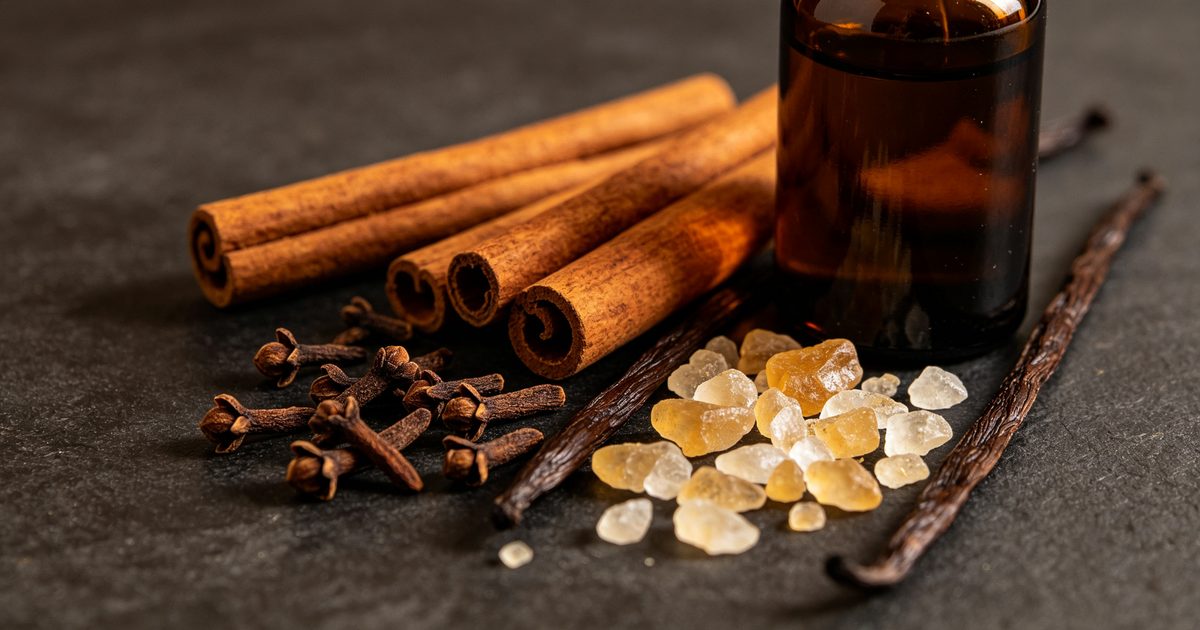
Oriental and spicy is the family people either fall into completely or back away from. It is warm, dense, unhurried, and it lasts — sometimes long past the point where you would like it to stop. What separates a beautiful spiced amber from a clove-and-air-freshener disaster is almost always dosage. Spices are measured in tenths of a percent, they keep developing for weeks, and two of the most useful ones are also two of the most restricted materials in perfumery.
Where the Heaviness Comes From
An oriental composition feels heavy for reasons that are physical before they are aesthetic.
- Resins and balsams. Labdanum, benzoin, opoponax, myrrh and frankincense are the foundation. Their molecules are large and barely volatile, so they hang on the skin for eight hours or more.
- Fixation. Those same resins act as fixatives: they slow the evaporation of everything sitting above them. A citrus top note layered over benzoin lasts dramatically longer than one layered over nothing.
- Sweet density. Vanillin, ethyl vanillin and coumarin (from tonka bean) fill the space between molecules with something we perceive as thick and rounded. Sweetness reads as weight.
- Nothing sharp to lift it. Unlike a citrus cologne, an oriental has almost no high-volatility terpenes to open it up. The composition is round from the first second to the last.
- Concentration. This family is traditionally launched at eau de parfum strength or higher, which compounds everything above.
The classic amber accord — the thing most people mean when they say an oriental smells "ambery" — is not one material. It is a three-legged stool: labdanum for the resinous honeyed darkness, vanillin for the creamy sweetness, and benzoin for the soft balsamic body. Change the ratio and you change the century the perfume smells like.
Modern perfumers add diffusion: Ambroxan, ISO E Super and sandalwood materials keep a heavy base from turning into a puddle. Without them, old-style orientals can smell flat and closed.
The Spice Cabinet
Three materials do most of the work, and the distinctions between them matter more than beginners expect.
| Material | Main Chemistry | Smell & Behaviour | Working Dosage | Restriction Watch |
|---|---|---|---|---|
| Cinnamon bark oil | Cinnamaldehyde 60–80% | Hot, sweet, dense, unmistakably "red hots" | 0.05–0.3% of concentrate | Cinnamaldehyde — strong sensitiser |
| Cinnamon leaf oil | Eugenol 70–90% | Clove-like, drier, less sweet; much cheaper | 0.1–0.5% | Eugenol — sensitiser |
| Cassia oil | Cinnamaldehyde + coumarin | Coarser, harsher cinnamon; common adulterant | Avoid in fine fragrance | Coumarin content — hepatotoxicity concern |
| Clove bud oil | Eugenol 70–90% | Warm, sweet-medicinal, dental; projects hard | 0.1–0.5% | Eugenol — sensitiser, strictly limited |
| Nutmeg / mace | Sabinene, myristicin | Warm, nutty, slightly woody; softer than clove | 0.1–0.5% | Sensitisation risk; keep low |
| Cardamom | Cineole, linalyl acetate | Fresh-camphoraceous spark; lifts a heavy base | 0.5–3% | Comparatively friendly |
| Pink pepper | Limonene, alpha-phellandrene | Rosy-peppery sparkle; the modernist's choice | 0.5–3% | Limonene oxidation if stored badly |
| Vanilla absolute / vanillin | Vanillin | Creamy sweet backbone; dulls a formula above ~5% | 1–5% (ethyl vanillin: a third of that) | Discolours white products |
| Benzoin / labdanum | Benzoic & cinnamic acids; labdanolic acids | Balsamic, resinous, honeyed; the amber base | 3–15% | Benzoin can be a contact allergen; use resinoid carefully |
Scroll sideways to see the full table.
The cinnamon trap is worth spelling out: bark, leaf and cassia are three different materials that all get sold as "cinnamon". Bark is the perfumer's choice and the most expensive. Leaf smells closer to clove and is a fifth of the price. Cassia is the harsh, coumarin-containing oil widely used in flavouring — if your cinnamon note smells coarse and flat, you may have been sold cassia.
Dosage Control: How Spices Are Actually Handled
The single most common beginner mistake is treating spices like ordinary ingredients. They are not — they are closer to hot sauce, and they are regulated accordingly.
- Make dilutions first. Prepare each spice as a 1% (or at most 10%) solution in ethanol or DPG. Trying to weigh 0.05% of neat cinnamon bark oil is how you ruin a batch.
- Add last, in drops. Build the accord from the base up, then bring the spice in drop by drop at the end. You can always add; you cannot take out.
- Judge after two weeks, not two minutes. Spices keep diffusing and integrating during maceration. An accord that smells perfectly balanced on day two is frequently harsh by week three. Rest it, then re-evaluate.
- Know the restricted list. Cinnamaldehyde and eugenol are IFRA-restricted sensitisers with limits measured in fractions of a percent for leave-on products. Coumarin (tonka, cassia) carries a separate limit because of liver toxicity. Isoeugenol, citral, limonene and linalool all have rules too.
- Plan for labelling. Most spices bring declarable allergens with them — eugenol, cinnamaldehyde, coumarin, limonene, linalool, geraniol. If you sell in the EU or UK, budget for allergen declaration; the EU expanded its list of declarable fragrance allergens substantially in 2023, with the labelling obligations phasing in over the following years. Check the current text rather than relying on a summary.
- Watch the colour. Vanillin and benzoin darken products over time — white soap, white wax and pale lotions will drift amber-brown. In candles, that is usually acceptable; in a white cold-process soap, it is a design decision.
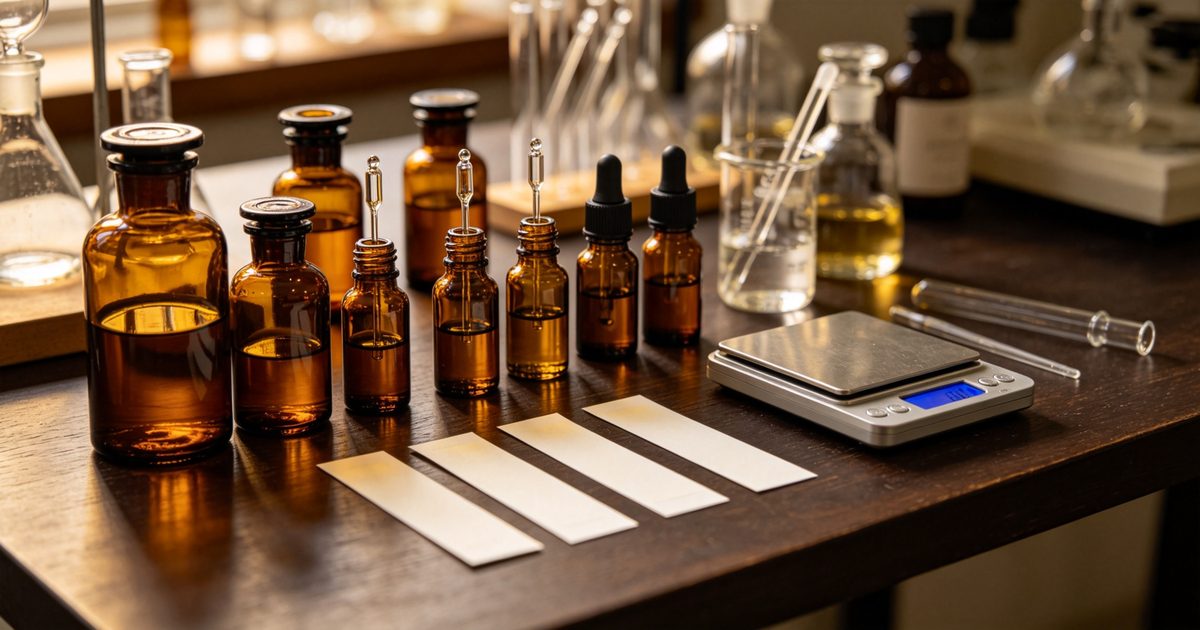
Benzoin Resinoid (Siam or Sumatra)
The cheapest way to make a blend smell expensive and warm: vanillic, balsamic, softly sweet, and it fixes everything above it. Siam benzoin is the sweeter, more vanilla-like grade; Sumatra is drier and more balsamic. Warm gently before use — it is thick.
Cold-Weather and Festive Formulas
Three blends that cover most of what people actually want in autumn and winter. Parts are for a concentrate; dilute before use.
- Mulled orange (room diffuser) — sweet orange 55, cedarwood 25, benzoin 10, cinnamon leaf 4, clove bud 1.5, nutmeg 1, vanillin 3.5. Use 3–4 drops per 100 ml of water, 20 minutes at a time. The clove number is deliberately tiny: it is the note guests will notice if you overdo it.
- Fireside incense (room or candle) — frankincense 25, labdanum 15, cedarwood 25, benzoin 10, myrrh 8, cardamom 4, clove bud 1, black pepper 2. Smoky, resinous, and much more interesting than another vanilla-and-cinnamon number.
- Spiced vanilla (wearable perfume concentrate) — vanillin 4, ethyl vanillin 1, benzoin 8, tonka 5, labdanum 6, sandalwood 20, bergamot FCF 8, pink pepper 2, cinnamon bark 0.1, clove bud 0.2, musk 10, ISO E Super 15. Dilute to 18–20% in perfumer's alcohol for an eau de parfum and rest it for two weeks before judging.
For candles, two extra rules. Vanillin-heavy blends discolour soy wax and throw much hotter than they smell cold, so test at 6–10% fragrance load and cure for a week before you judge hot throw. And keep spice levels conservative in enclosed spaces — a candle that smells charming in a ventilated shop can be overwhelming in a small bathroom.
If you are scenting a business rather than your home, our signature scent guide covers the intensity and safety judgement calls, and the soy candle guide covers load rates in detail.
Where Oriental Ends and Gourmand Begins
These two families overlap so much that the border is genuinely contested, but the working definition is simple.
Oriental = resin, balsam, spice, incense. Think labdanum, myrrh, frankincense, benzoin, saffron, clove, cinnamon, amber. It smells like a spice market or a church, warm and dry and slightly dusty.
Gourmand = edible. Caramel, praline, chocolate, honey, milk, coffee, cotton candy, almond. The signature molecules are ethyl maltol (candy floss), furaneol (strawberry jam), heliotropin (almond-cherry), and heavy doses of vanillin and ethyl vanillin.
The reason the border blurs is that they share the same bottom drawer: vanillin, ethyl maltol, tonka and benzoin sit in both families. The modern hybrid — the patchouli-and-praline style that started appearing in the early 1990s — is simply an oriental base turned up to dessert volume.
Two practical tests. First: if you would describe it as "tasty", it is gourmand; if you would describe it as "warm" or "smoky", it is oriental. Second, and more useful at the bench: ethyl maltol above roughly 0.5–1% pulls an oriental decisively into gourmand territory, while adding frankincense, labdanum or a dry smoke note pulls it straight back. When a formula feels childish, that is usually the lever to move.
Frequently Asked Questions
What makes an oriental perfume feel heavy?
Weight comes from the base. Oriental compositions are built on resins and balsams such as labdanum, benzoin, opoponax, myrrh and frankincense, plus sweet materials like vanillin and coumarin. These are large, slow-evaporating molecules that also act as fixatives, so the whole composition sits close to the skin for eight hours or more instead of lifting away. Remove the resin base and the same spices suddenly smell light.
How much cinnamon or clove should I use in a perfume?
Far less than you think. As working ranges in the fragrance concentrate: cinnamon bark oil around 0.05 to 0.3%, clove bud oil around 0.1 to 0.5%, cinnamon leaf oil around 0.1 to 0.5%. Both cinnamaldehyde and eugenol are IFRA-restricted sensitisers, so verify the exact limit for your product category rather than trusting a blog number, including this one. Make a 1% dilution and build up from there.
Why does my spicy blend get stronger after a few weeks?
Spices keep developing during maceration. Materials like clove, cinnamon and nutmeg continue to diffuse through the alcohol and integrate with resins and vanillin over days to weeks, so an accord that smells balanced on day one can smell harsh or medicinal by week three. Always judge a spicy formula after at least two weeks of resting, and dose conservatively at the start.
What is the difference between oriental and gourmand fragrances?
Oriental fragrances are built on resins, balsams and spices — incense, amber, the spice market. Gourmand fragrances smell edible: caramel, praline, chocolate, milk, coffee, cotton candy. The two share vanillin, tonka, benzoin and ethyl maltol, which is why the border is fuzzy. If it smells like a dessert, it is gourmand; if it smells like incense or resin, it is oriental.
The Bottom Line
Oriental and spicy is the most forgiving family to love and the least forgiving to blend. The weight comes from resins and balsams, not from the spices themselves; the spices are seasoning, measured in tenths of a percent, restricted for good reason, and still developing weeks after you stop working. Build a benzoin-and-vanillin base first, add spice in drops from a 1% dilution, and let it rest before you trust your own nose. Then read the neighbouring families — woody, floral and citrus — or start building with our beginner's formulation guide. Full profiles live in the Ingredient Encyclopedia.
Related Articles
This post may contain affiliate links. If you click and buy, we may earn a small commission at no extra cost to you.