
Floral Notes Explained: Rose, Jasmine & Neroli
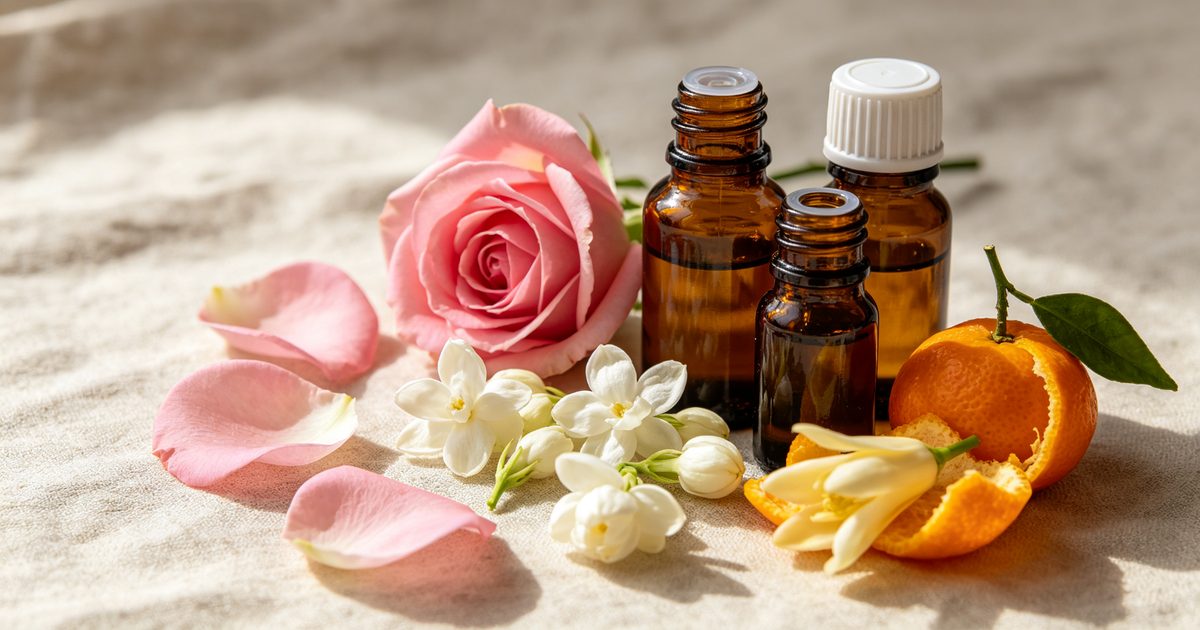
Say "floral" to someone and they picture a bouquet. Say it to a perfumer and they picture three very different engineering problems. Rose is a rose only after you decide whether you want the green brightness of a distilled otto or the jammy depth of an absolute. Jasmine refuses to be distilled at all. Neroli sits somewhere in between and quietly holds half of classical eau de cologne together. Get those differences straight and you stop guessing why a formula smells flat, and start knowing which bottle to reach for.
Rose: The Reference Point
Nearly every floral discussion starts with rose because rose is the yardstick. The two benchmark materials come from the same flower, Rosa damascena, and they barely resemble each other on a blotter.
Rose otto (also called attar of rose) is steam-distilled. It opens green, lemony and slightly metallic, with a crystalline lift that reads as "morning garden" more than "bouquet on a table". That brightness comes from the lighter molecules that survive distillation, including rose oxide and the citronellol–geraniol backbone. Bulgarian and Turkish producers in the Isparta valley are the classic sources.
Rose absolute is solvent-extracted: petals go into hexane, the solvent is washed out to leave a waxy concrete, and the concrete is dissolved in ethanol and filtered down to a pourable absolute. What you gain is everything steam leaves behind — the deep honeyed, slightly spicy, almost jam-like body built on phenyl ethyl alcohol and beta-damascenone. It is heavier, darker, and usually far cheaper per kilo, but it needs a lighter hand in a formula.
Cheap rose materials are usually built on rose geranium (Pelargonium graveolens) and synthetic rose alcohols. They are perfectly respectable — geranium oil is a legitimate perfumery material with its own rosy-green-minty character — but they are not a substitute for damascena. If a supplier sells "pure rose oil" at geranium prices, it is geranium.
Jasmine: The One You Cannot Distill
Jasmine is the great exception among the classics. Put the flowers through steam distillation and the heat destroys the very molecules that make them worth harvesting. So jasmine is extracted another way: petals are washed in solvent to produce a solid, waxy concrete, then the concrete is turned into a liquid absolute with ethanol. Supercritical CO2 extraction is the modern, solvent-free alternative, and it produces a material that sits between the two.
The smell is the reason nobody gives up on it: rich, narcotic, indolic, animalic underneath the sweetness, with a warm tea-like facet. That animalic edge comes largely from indole, a molecule that smells floral at 0.1% and barnyard at 5%. Perfumers live in that narrow window.
Two practical notes. First, jasmine is overwhelmingly powerful — a fraction of a percent too much and it eats the formula. Second, most modern "jasmine" effects are carried by Hedione and related jasmonates, which give the airy, transparent, petal-like radiance without the narcotic weight. Real absolute supplies the soul; Hedione supplies the light. Also worth knowing: Jasminum sambac (used in Asian tea scenting) is greener, creamier and more indolic than the grandiflorum absolute most Western perfumery is built on.
Neroli: The Citrus-Floral Bridge
Neroli is steam-distilled from the blossoms of the bitter orange tree, Citrus aurantium var. amara. It is the one pillar floral that is also half citrus, which is what makes it so useful: green and slightly bitter at the top, honeyed and softly floral in the middle, with a clean woody-musky drydown. If rose is velvet and jasmine is silk, neroli is linen.
Its two siblings come from the same tree and are worth learning alongside it. Orange flower absolute is solvent-extracted from the same blossoms: sweeter, heavier, more narcotic, closer to jasmine territory than neroli is. Petitgrain is distilled from the leaves and twigs: sharply green, woody, twiggy, and cheap — an excellent way to stretch neroli without faking it.
Why the Extraction Method Changes Everything
Extraction is not a footnote — it decides which molecules end up in your bottle.
- Steam distillation — cheap, clean, no solvent residue, but heat damages delicate compounds and heavy, non-volatile molecules never come over. Best for rose otto, neroli, petitgrain, and most woods.
- Solvent extraction (concrete → absolute) — captures the full aromatic profile including the heavy waxy fraction, which is why absolutes smell deeper and last longer. The trade-off is trace solvent residue and a higher price. This is how jasmine, tuberose, orange flower and rose absolute are made.
- Supercritical CO2 extraction — no solvent residue, low heat, and a profile close to the living flower. Equipment is expensive, so prices sit between the two above.
- Enfleurage — fat absorbs the flower's aroma over days. Historically essential for jasmine and tuberose; today it is essentially a museum technique, occasionally revived for tiny artisanal batches.
- Expression (cold pressing) — mechanical pressing of citrus peel. Not used for these three florals, but it is how every citrus note is made, and it matters enormously for safety there.
Side-by-Side Comparison
| Material | Extraction | Character | Where It Sits | Best Season |
|---|---|---|---|---|
| Rose otto | Steam distillation | Green, lemony, crystalline, slightly metallic | Heart, edging into base | Spring, cool summer evenings |
| Rose absolute | Solvent extraction | Deep, honeyed, jammy, spicy-sweet | Heart to base | Autumn, winter, evening wear |
| Jasmine grandiflorum absolute | Solvent (or CO2) | Narcotic, indolic, warm tea, animalic | Heart, long-lasting | Late spring through autumn |
| Jasmine sambac absolute | Solvent (or CO2) | Greener, creamier, more indolic | Heart, long-lasting | Summer evenings, humid climates |
| Neroli | Steam distillation | Green, honeyed, clean, slightly bitter | Top to heart | Spring, summer, daytime |
| Orange flower absolute | Solvent extraction | Sweeter, heavier, narcotic | Heart | Autumn, evening |
| Petitgrain | Steam distillation (leaves/twigs) | Sharp green, woody, twiggy | Top to heart | Spring, summer (stretcher) |
Scroll sideways to see the full table.
Seasons and Occasions
None of these rules are laws, but they are the defaults most perfumers work from.
- Spring and daytime — neroli, rose otto, petitgrain. Anything transparent that reads as clean fabric and open windows. Office-safe, close to the skin.
- High summer and humidity — neroli and jasmine sambac. Heat amplifies everything, so dose low; heavy rose absolute turns cloying fast above 30°C.
- Autumn — rose absolute comes into its own, especially over woods and resins. Jasmine grandiflorum works beautifully once the air cools.
- Winter and evening — jasmine absolute layered over woody notes, vanilla, benzoin or spiced orientals. This is where florals get their weight and their sillage.
- Occasion — neroli and rose otto are the low-risk choices for work, weddings, and anywhere you will be close to other people. Jasmine absolute is a statement; it projects and it lingers, which is either the point or a problem.
Neroli Essential Oil (Bitter Orange Blossom)
The most forgiving of the three florals: recognisably floral, cheap enough to experiment with, and it teaches you how a top-to-heart material behaves. Ask for the GC/MS report and check the botanical name is Citrus aurantium var. amara.
Blending Formulas That Actually Work
These are starting ratios for the fragrance concentrate (the aromatic part before you dilute into alcohol or oil). Dilute the finished concentrate to roughly 15–20% in perfumer's alcohol for an eau de parfum. Adjust in small steps and let each version rest a few days before judging.
- Modern rose — rose base 25%, Hedione 20%, sandalwood 15%, ISO E Super 12%, white musk 10%, pink pepper 3%. Clean, wearable, and it will not read as your grandmother's rose.
- Night-blooming jasmine — jasmine absolute 4%, Hedione 30%, benzyl acetate 8%, vanillin 3%, sandalwood 15%, ambrette-like musk 12%. The absolute is a seasoning here, not the main ingredient — that is deliberate.
- Neroli cologne, rebuilt — bergamot 35%, neroli 20%, petitgrain 10%, rosemary 3%, orange flower absolute 2%, light musk 8%, cedarwood 6%. Classic structure with a longer tail than the 18th-century original.
- Rose–oud, restrained — rose absolute 20%, oud accord 5%, saffron 2%, sandalwood 25%, labdanum 8%, musk 12%. Keep the oud low; it climbs over time.
- Floral over spice, for cold weather — jasmine absolute 5%, rose absolute 12%, cinnamon leaf 0.5%, clove bud 0.3%, benzoin 15%, vanillin 4%, sandalwood 20%. A quarter-percent of clove is the difference between warm and medicinal.
Two habits that save beginners the most grief: keep absolutes under roughly 5% while you are learning, and always evaluate a floral accord at 30 minutes, 3 hours and 24 hours — florals move more than any other family, and the first sniff is the least informative one.
Frequently Asked Questions
What is the difference between rose otto and rose absolute?
Rose otto is steam-distilled and smells brighter, greener and more lemony, with a crystalline quality that many perfumers prefer in fine fragrance. Rose absolute is solvent-extracted, producing a deeper, honeyed, almost jammy rose that is richer in the heavy aromatic compounds lost to steam. Absolute is usually considerably cheaper per kilo and much stronger, so it is dosed lower.
Why is jasmine absolute so expensive?
Jasmine flowers are picked by hand at night when their aroma peaks, they yield almost no oil, and the delicate aroma compounds cannot survive steam distillation. Extraction requires solvent (or supercritical CO2) plus a second step to turn the waxy concrete into an absolute. Thousands of kilos of blossoms are needed for a single kilo of absolute.
Are neroli and orange blossom the same thing?
They come from the same tree, Citrus aurantium var. amara, but they are not the same product. Neroli is the steam-distilled oil from the blossoms: green, honeyed and slightly metallic. Orange blossom absolute is solvent-extracted from the same flowers and smells heavier, sweeter and more narcotic. Petitgrain, distilled from the leaves and twigs, is the woody-green cousin.
Which floral note is best for a beginner to blend with?
Start with a rose base or a rose-geranium material. It is forgiving, blends across nearly every family, and teaches you how a small percentage change alters the whole accord. Jasmine and tuberose absolutes are far more dominant and can flatten a formula if overdosed by even a fraction of a percent.
The Bottom Line
Rose gives you structure, jasmine gives you narcotic depth, neroli gives you lift — and the extraction method decides which version of each you are holding. Learn all three on blotters before you blend, keep absolutes low, and judge everything over 24 hours rather than 24 seconds. Then move on to the families they sit on: woody notes, citrus notes and oriental and spicy notes. More profiles live in our Ingredient Encyclopedia, and if you are new to formulation, our beginner's guide walks through building a formula step by step.
Related Articles
This post may contain affiliate links. If you click and buy, we may earn a small commission at no extra cost to you.