
Citrus Notes Explained: Bergamot, Sweet Orange & Lemon
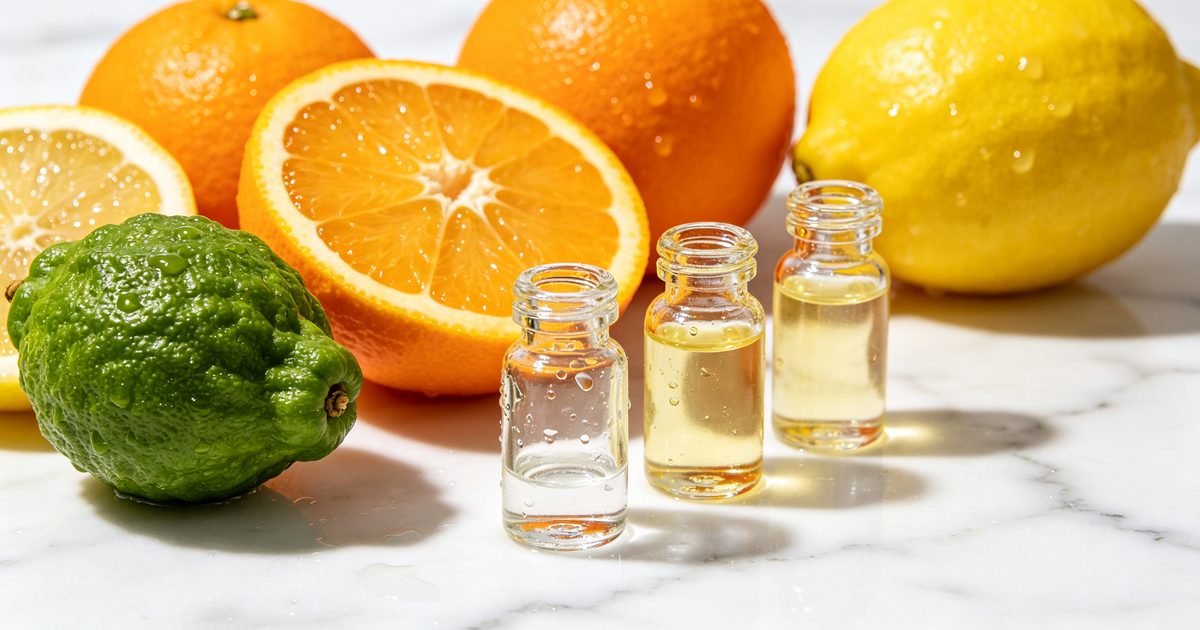
Citrus is the opening handshake of perfumery: bright, immediate, universally readable — and gone before you have finished reading this sentence. That speed is a chemical fact, not a defect, and once you understand it, you can work with it instead of fighting it. Citrus also carries two safety rules that every maker learns eventually, ideally before rather than after a client complains: one about the sun, one about old oil.
Built to Leave: The Volatility Problem
Almost every citrus oil is cold-pressed from the peel, and what comes out is overwhelmingly one class of molecule. Sweet orange oil is roughly 90–95% d-limonene. Lemon is around 65–70% limonene with beta-pinene and gamma-terpinene alongside it. These are small monoterpenes with high vapour pressure, which in plain terms means they evaporate eagerly.
The practical consequences:
- On a blotter, the recognisable citrus character is largely gone in 15–30 minutes.
- On warm skin, it can be closer to 5–20 minutes, faster in dry or hot air.
- Adding more citrus does not fix it. Doubling the top note doubles the intensity for ten minutes and changes nothing at hour three.
What actually works is anchoring. Perfumers build a slow scaffold underneath the citrus and let it reappear on skin movement. The usual tools are musks, transparent woods and ISO E Super, Hedione for diffusion, and modern long-lived "citrus-ish" molecules like Dihydromyrcenol (lime-lavender freshness that lasts for hours) and Rhubofix (grapefruit-rhubarb, very substantive). A few percent of cedarwood or vetiver in the base also helps the top note feel like it lingers.
Bergamot, Sweet Orange, Lemon
These three get grouped together constantly, and they are genuinely different materials.
| Oil | Botanical Source | Dominant Molecules | Character | Phototoxic? |
|---|---|---|---|---|
| Bergamot (expressed) | Citrus bergamia peel, mostly Calabria | Limonene, linalyl acetate, linalool | Sparkling but rounded — the only citrus with a real floral body | Yes — bergapten |
| Bergamot FCF | Same oil, furocoumarins removed | Same minus the furocoumarins | Very close, marginally flatter | No |
| Sweet orange (expressed) | Citrus sinensis peel | Limonene ~90–95% | Juicy, sweet, simple; a juice-industry by-product, hence very cheap | Generally considered low risk |
| Lemon (expressed) | Citrus limon peel | Limonene, beta-pinene, citral (neral + geranial) | Tart, sharp, slightly aldehyde-like; reads as "clean" to most people | Mild — check the IFRA limit |
| Lemon (steam-distilled) | Citrus limon peel | Limonene, little citral | Softer, longer-lasting on blotter, less juicy | No |
| Petitgrain | Bitter orange leaves and twigs | Linalyl acetate, linalool | Green, woody-citrus; the cheapest way to extend a citrus accord | No |
Scroll sideways to see the full table.
Bergamot is the perfumer's citrus: the only one with genuine complexity, because its 30-odd percent of linalyl acetate and linalool gives it a floral-woody body that orange and lemon simply do not have. That is why it opens such a large share of classic eaux de cologne and modern fresh fragrances — and it is also the one with a phototoxicity problem, covered below.
Sweet orange is charming, cheap and one-dimensional. It smells wonderful for fifteen minutes and then nothing. Use it where you want instant friendliness and do not need development: room sprays, candles, soap, and the top of a diffuser blend. Expect to pay very little for it; it is a by-product of the orange juice industry.
Lemon is the sharpest of the three, with a citral-driven tartness that reads as acidic and cleaning-adjacent. That association is a feature in a kitchen or a bathroom product and a liability in a fine fragrance, where lemon used carelessly turns the whole composition into a household cleaner. Distilled lemon lasts noticeably longer than expressed.
Does Limonene Actually Wake You Up?
Here is the honest version, because this topic is oversold.
What is solid: the olfactory system has a direct anatomical route to the amygdala and hippocampus, the brain regions involved in emotion and memory. Smell does not need to be routed through the thalamus first, which is part of why a scent can shift mood faster than a sound or an image. That much is textbook.
What is reasonably good: animal research. A widely cited 2006 study in Behavioural Brain Research found that inhaling lemon oil vapour produced anti-stress-like effects in mice, and that the effect was blocked by drugs interfering with serotonin and dopamine signalling — suggesting those pathways are involved. Limonene appears to be a major active component.
What is weak: human evidence. Studies are small, short, poorly blinded, and inconsistent — some report improved alertness or mood, some report the opposite, and expectancy plays a measurable role. If you are told a scent is energising, you are likely to report feeling more energised.
What kills the effect regardless: olfactory adaptation. Your nose largely stops registering a constant smell within five to fifteen minutes. A diffuser running all afternoon is not making you more alert at 4pm; you stopped smelling it at 10am.
So: use citrus at work because it is pleasant, cheap and low-risk, and use it in short bursts. It is a nudge, not a drug. If you want sustained focus, sleep and breaks beat any essential oil.
A Daytime Workspace Diffusion Plan
Small, intermittent and personal beats big and continuous. Here is a plan that respects both the chemistry and your colleagues.
- Burst, do not stream. Run a diffuser for 10–15 minutes at the start of a focus block and again after a break. Anything longer is wasted oil and a numbed nose.
- Keep the dose low. Two to three drops of a blend per 100 ml of water in an ultrasonic diffuser is plenty for a small room. Stronger is not better; it is just more likely to bother someone.
- Prefer personal to shared. In an open office, one or two drops on a blotter or a scented stone on your desk gives you the effect without imposing it. Scent sensitivity and migraine are real, and you cannot smell-notify your coworkers.
- Anchor the blend. A straight citrus mix is gone in twenty minutes. Adding 10–20% of cedarwood, vetiver or a light musk material roughly triples the life of the citrus on a blotter and makes the whole thing smell more considered.
- Match the task. Bergamot or sweet orange plus a trace of rosemary or peppermint for analytical work; lemon plus a green note for a post-lunch reset; grapefruit with vetiver when you want fresh but calm rather than buzzy.
- Ventilate. Limonene reacts with ozone in indoor air to form trace secondary pollutants, and the oxidised products are the ones that irritate. Crack a window; skip the nebuliser in a small room.
- Pets. Cats lack the liver enzymes to clear many aromatic compounds. Diffuse in a room they can leave, keep it short, and never apply oils to an animal.
Two starter blends, in parts: Focus — bergamot FCF 50, lemon 20, rosemary 8, peppermint 2, cedarwood 20. Calm-fresh — sweet orange 45, neroli 15, petitgrain 15, vetiver 10, cedarwood 15. Both last far longer than a straight citrus oil, and neither smells like a cleaning product.
If you are scenting a customer-facing space instead of your own desk, the rules change — see our signature scent guide for intensity and placement decisions.
Phototoxicity: The Rule You Cannot Skip
Cold-pressed bergamot contains bergapten (5-methoxypsoralen), a furocoumarin. On skin exposed to UVA light, it can trigger phytophotodermatitis — redness, burning, and in some cases dark patches of hyperpigmentation that last for months. Historically this was known as berloque dermatitis, from the pendant-shaped marks left on the neck by bergamot-containing perfumes.
The working rules:
- Any leave-on product that will see daylight — perfume, body oil, aftershave balm — should use a bergapten-free (FCF) bergamot, a steam-distilled alternative, or stay within the current IFRA limit for that product category.
- Furocoumarins are not volatile, so steam-distilled citrus oils are essentially free of them. That is also why distilled lemon lasts longer than expressed.
- Other phototoxic materials worth knowing: expressed lime, expressed bitter orange, angelica root, cumin, rue, and fig leaf absolute. Expressed sweet orange is generally treated as low risk.
- Rinse-off and non-skin products (soap, candles, room sprays) are far less constrained, but verify the limit for your category rather than assuming.
The second safety rule is about age, not sunlight. Limonene oxidises on contact with air into limonene oxide and related compounds, and those oxidation products are markedly stronger skin sensitisers than fresh limonene. Oxidised citrus oil is one of the most common causes of fragrance contact allergy. Store citrus oils in the fridge, in a full, tightly capped amber bottle, away from light, and use them within six to twelve months of opening. If it smells sharp, turpentine-like or like paint, throw it out.
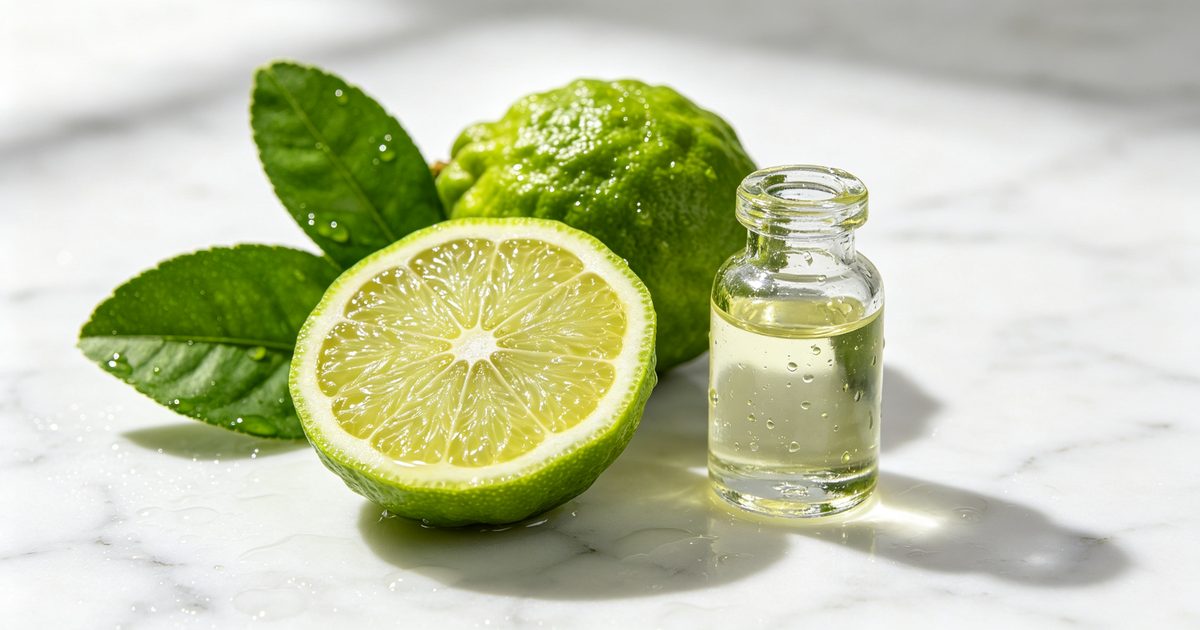
Bergamot FCF Essential Oil (Bergapten-Free)
The perfumer's citrus without the phototoxicity problem — suitable for leave-on products that will see daylight. Check the label says FCF or bergapten-free, and ask the supplier for the GC/MS report and IFRA certificate.
Frequently Asked Questions
Why does my citrus perfume disappear after twenty minutes?
Because citrus oils are almost entirely monoterpenes, mostly limonene, which are small, light molecules with very high vapour pressure. On a blotter most of the citrus character is gone in 15 to 30 minutes, and on warm skin even faster. The fix is not more citrus: it is anchoring the top note with slower materials such as musks, woods, Hedione, or modern long-lived citrus molecules like Dihydromyrcenol and Rhubofix.
Which citrus oils are phototoxic?
Cold-pressed bergamot is the classic problem: it contains bergapten, a furocoumarin that reacts with UVA light and can cause phytophotodermatitis, including long-lasting dark patches. Expressed lime, bitter orange, angelica root, cumin and fig leaf are also phototoxic. Expressed sweet orange is generally considered low risk. For anything applied to skin that will see daylight, use a bergapten-free (FCF) grade or a steam-distilled version, and check the current IFRA limit for your product category.
Does diffusing citrus oil actually make you more alert?
Partly, and honestly less than the marketing suggests. Animal research on lemon oil vapour and limonene is reasonably consistent, and smell signals reach the brain's emotion and memory centres directly. Human studies are small, short and inconsistent, effects are modest, and your nose habituates to a constant scent within minutes. Treat citrus as a cheap, pleasant nudge that works best in short bursts, not as a substitute for sleep or caffeine.
How long do citrus essential oils keep?
Much shorter than most people expect: roughly 6 to 12 months once opened. Limonene oxidises on contact with air into limonene oxide and related compounds, which are significantly stronger skin sensitisers than fresh limonene. Store citrus oils in the fridge in a full, tightly capped amber bottle away from light, and discard any oil that starts to smell sharp, turpentine-like or painty.
The Bottom Line
Citrus is the fastest, friendliest and most misunderstood family in perfumery. It will never last on its own — anchor it. It will not transform your productivity — use it in short bursts and enjoy it. And it has two rules you should internalise before you ever sell a product containing it: keep bergapten out of anything that touches sun-exposed skin, and keep oxidised oil out of everything. Read the bergamot profile next, then compare the other families: floral, woody and oriental and spicy. Ready to blend? Our beginner's formulation guide walks through a full formula step by step.
Related Articles
This post may contain affiliate links. If you click and buy, we may earn a small commission at no extra cost to you.