
Ambroxan in Perfumery: Uses, Safety & Blending Guide
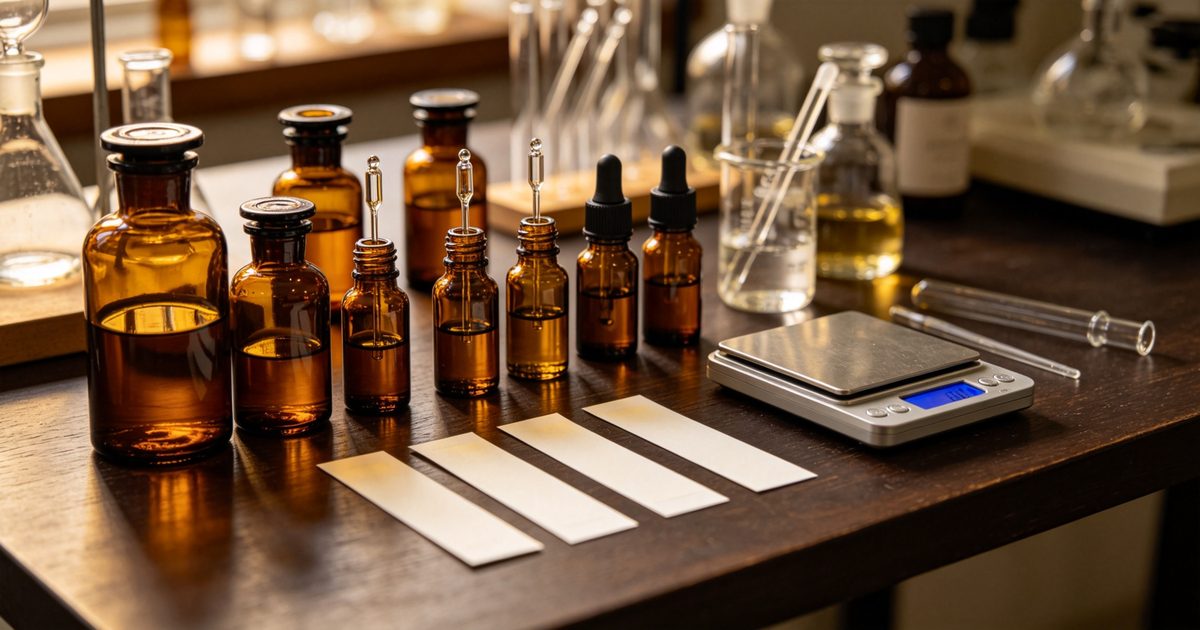
If a perfume from the last fifteen years made you think "this smells expensive and it will not leave my jacket," there is a good chance ambroxan was involved. This single synthetic molecule replaced one of the rarest materials in fragrance history — natural ambergris — and went on to define the clean, radiant, long-lasting signature of modern niche perfumery.
What Is Ambroxan?
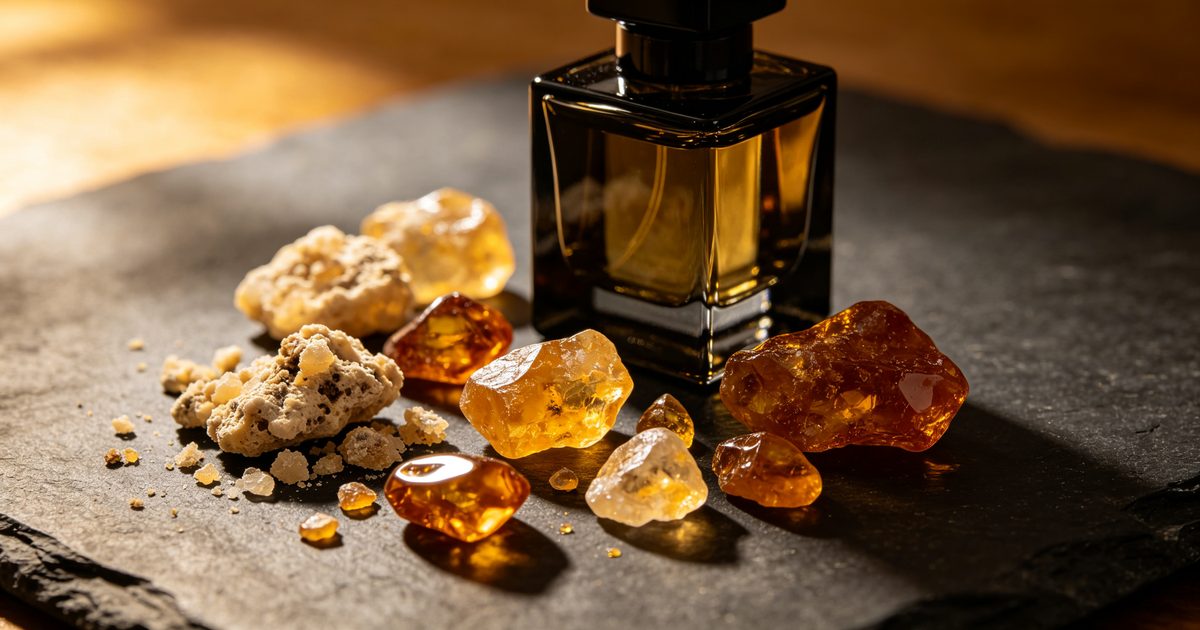
Ambroxan is a trade name (from Firmenich) for an ambroxide-type molecule — a fully synthetic material designed to reproduce the scent of ambergris, the fabled substance formed in sperm whales and historically worth more than gold by weight. Natural ambergris is vanishingly rare, legally restricted in several markets, and wildly inconsistent; ambroxan delivers its magic reliably, affordably, and with no animal involvement.
It was originally manufactured from sclareol, a compound extracted from clary sage, and today fully synthetic production routes also exist. The smell: dry, woody amber with musky, faintly salty-mineral facets — clean rather than sweet, radiant rather than heavy. And the tenacity is legendary: ambroxan stays detectable on a smelling blotter for weeks, and on skin it outlasts virtually everything else in the formula.
How Perfumers Use Ambroxan
Ambroxan is a base note and fixative, but "base note" undersells it. Its real roles:
- Volume and radiance — it gives a composition body and projection, making the whole structure feel bigger and more polished.
- Extreme longevity — a few percent can stretch a fragrance's life on skin from hours into the next morning.
- The modern "clean amber" signature — the dry, woody glow behind countless contemporary bestsellers and niche hits.
- Anchoring fresh scents — under citrus and tea accords, it provides the staying power that fresh notes cannot supply themselves.
Typical dosage: a standard working range is about 0.5–10% of the concentrate. Some modern niche houses push dramatically higher — one famous minimalist fragrance is essentially a dilution of this molecule family alone. A practical warning: partial anosmia to ambroxan is common. Formulators stop smelling it and keep adding more, while everyone around them still smells it clearly. Always get a second nose before signing off on an ambroxan-heavy formula. Our beginner's formulation guide covers evaluation technique in detail.
Safety & IFRA
Ambroxan has been used at scale for decades and carries a broadly favorable profile — one reason it replaced restricted naturals so completely. The compliance logic, however, is the same as for every other material: IFRA assesses ingredients within product categories, so a leave-on perfume, a rinse-off shampoo, and a candle are evaluated differently, and requirements evolve between amendments.
The professional habit: consult the current IFRA Standards and your supplier's documentation. Buy from suppliers who provide an IFRA conformity certificate and SDS for each batch — our supplier guide explains how to vet them — and verify your finished formula against the category you are actually producing. One bonus: because ambroxan is synthetic, it sidesteps the legal and ethical complications attached to natural ambergris entirely.
Ambroxan 10% Dilution in DPG
The easiest way to work with this molecule at home — pre-diluted for accurate drop-by-drop dosing. Look for sellers who state the source of their ambroxan and provide an IFRA certificate with the batch.
Blending Tips
- Iso E Super — the other pillar of transparent modern woods; together they build radiant, weightless structures.
- Hedione — airy jasmine lift over a glowing amber base: the DNA of contemporary niche florals.
- Clean musks — polycyclic and macrocyclic musks melt into ambroxan for a second-skin drydown.
- Cedarwood and vetiver — dry woods gain polish and projection without losing their character.
- Vanillin and tonka — a small sweet core inside the dry amber glow; modern gourmand-amber hybrids live here.
- Bergamot on top — the classic contrast: a sparkling, short-lived opening over a base that lasts all day.
- Sandalwood — creamy wood plus dry amber is the quiet-luxury accord behind countless "expensive-smelling" skin scents.
Beginner exercise: dose a plain cedarwood-musk base with ambroxan at 1%, 3%, and 6% on separate blotters, then smell them again the next day. The overnight difference is the entire lesson.
Frequently Asked Questions
What is the difference between ambroxan and natural ambergris?
Natural ambergris is a rare material formed in sperm whales and collected from beaches, with legal restrictions in several markets. Ambroxan is a synthetic molecule that reproduces ambergris's dry, woody-amber radiance at a fraction of the cost, with consistent quality and no animal involvement.
Why does ambroxan last so long?
Ambroxan is a heavy molecule with very low volatility, and it binds well to skin and fabric. On a smelling blotter it can remain detectable for weeks, and on skin it easily outlasts every top and heart note in the formula.
How much ambroxan should I use?
A typical working range is about 0.5-10% of the concentrate. Some modern niche fragrances overdose it dramatically, but be careful: many people develop partial anosmia to ambroxan and stop smelling it while everyone around them still can.
Is ambroxan vegan and animal-friendly?
Yes. Ambroxan is fully synthetic — originally derived from sclareol, a compound extracted from clary sage, and today also made by fully synthetic routes. No whales, no animal inputs.
The Bottom Line
Ambroxan is modern perfumery's engine room: it gives formulas radiance, polish, and a drydown measured in days rather than hours. Learn to dose it with a second nose, pair it with transparent woods and musks, and you hold the skeleton key to the contemporary niche style. Explore more materials in our Ingredient Encyclopedia, or see how these accords become real products in starting a perfume line on a small budget.
Related Articles
This post may contain affiliate links. If you click and buy, we may earn a small commission at no extra cost to you.