
Sandalwood in Perfumery: Uses, Safety & Blending Guide
Creamy, milky, softly sweet — sandalwood is the wood note that behaves like a caress rather than a statement. It has anchored perfume formulas for over a century, and it is also one of the industry's most important sustainability stories: the tree that made it famous was loved almost to death. Understanding sandalwood today means understanding both the natural oil and the brilliant synthetics built to replace it.
What Is Sandalwood?
The benchmark material is the essential oil steam-distilled from the heartwood of Santalum album — Indian (or East Indian) sandalwood. The tree must grow for decades before its heartwood develops significant oil, which is why the material was never cheap. Its scent is creamy, milky, warm, and softly woody, with a faint sweetness — driven mainly by two molecules, alpha- and beta-santalol.
Decades of overharvesting and smuggling decimated wild Indian populations, and legal trade is now tightly controlled. Genuine Santalum album oil sits among the most expensive essential oils in the world. That pressure created a family of alternatives every formulator should know:
- Australian sandalwood (Santalum spicatum) — sustainable and affordable, but drier and harsher, with less of the milky santalol richness.
- Plantation Santalum album — Indian sandalwood species now grown legally in Australian plantations; closer to the classic profile, priced accordingly.
- Synthetic santalol-mimicking molecules — the Sandalore, Polysantol, Bacdanol, Javanol, and Ebanol families. Each captures a different facet (creaminess, radiance, diffusion), and modern perfumery blends them like painters mixing pigments.
How Perfumers Use Sandalwood
Sandalwood is a base note and fixative. Its roles in a formula:
- Creamy foundation — it gives florals (especially rose) a soft, milky floor to stand on.
- Fixation — heavy and slow-evaporating, it extends the life of everything above it.
- Smoothing — it rounds off sharp spices, dry woods, and aggressive ambers.
- The "sandalwood complex" — modern formulas rarely use one material; they layer natural oil with two or three synthetic sandalwood alcohols to get depth, radiance, and cost control at once.
Typical dosage: in sandalwood-centered fragrances the total complex often runs about 5–30% of the concentrate; as a supporting player, even 1–2% adds perceptible creaminess. If you are formulating at home, our beginner's guide walks through building a woody base step by step.
Safety & IFRA
Sandalwood oil has a comparatively mild profile and a long history of skin use, but "gentle reputation" is not a compliance strategy. IFRA regulates materials by product category — leave-on, rinse-off, and non-skin products each carry different requirements, and those requirements change between amendments. The correct habit is to consult the current IFRA Standards and your supplier's documentation: ask for the IFRA conformity certificate and SDS for every oil or aroma chemical you buy, and keep them on file.
Sustainability deserves equal attention. If a seller offers "pure Mysore sandalwood" at a suspiciously low price, walk away — genuine supply is limited and documented. Buy from suppliers who can trace their oil to legal plantations or regulated sources; our supplier guide lists what documentation to request before committing to bulk orders.
Australian Sandalwood Essential Oil
Traceable Santalum spicatum from managed plantations — drier than the Indian classic but honest, sustainable, and excellent in blends. Request the GC/MS report and IFRA certificate before scaling up.
Blending Tips
- Rose — the great classical pairing; sandalwood turns rose velvety and almost edible.
- Vanillin, benzoin, and tonka — the creamy oriental base that powered a century of bestsellers.
- Vetiver and patchouli — earthy depth under the cream; the skeleton of many masculine woods.
- Ambroxan and Iso E Super — the modern transparent-wood style: radiant, clean, and long-lasting.
- Cardamom and black pepper — a spicy spark that keeps sandalwood from feeling sleepy.
- Hedione and white florals — milky wood plus airy jasmine is a signature of contemporary niche perfumery.
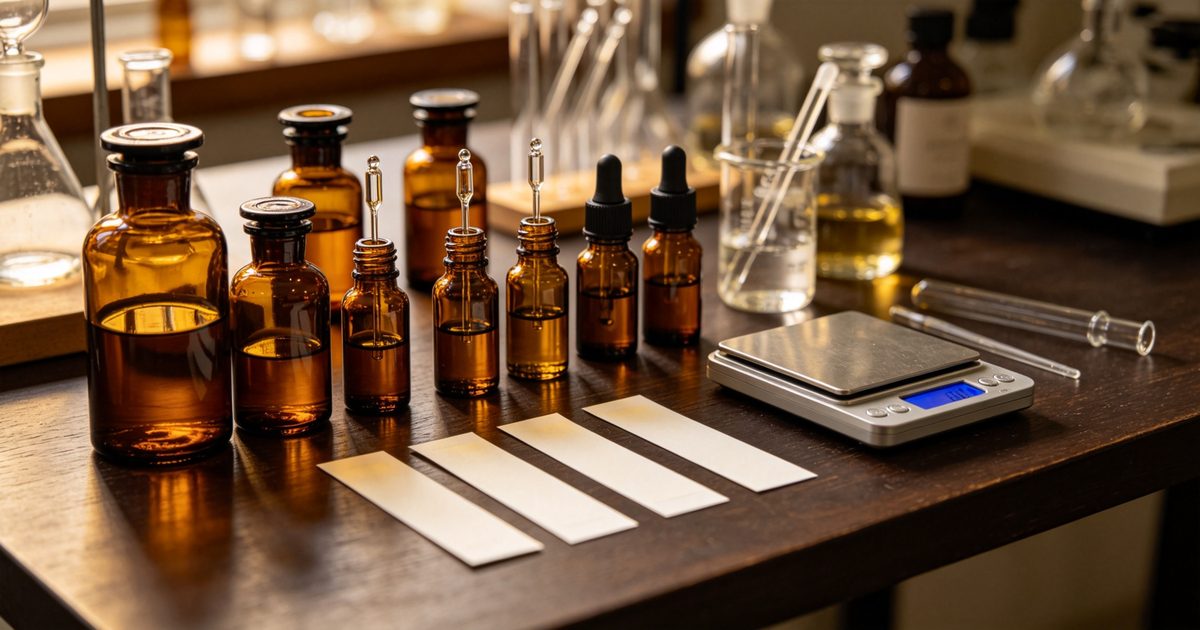
Beginner exercise: compare Australian sandalwood, one synthetic sandalwood molecule, and a 50/50 blend of the two on separate blotters over 24 hours. You will smell immediately why professionals layer them.
Frequently Asked Questions
Why is real Indian sandalwood oil so expensive?
Santalum album trees take decades to develop fragrant heartwood, and decades of overharvesting and smuggling decimated wild populations. Legal supply is now tightly controlled and limited, so genuine Indian sandalwood oil commands some of the highest prices in the essential oil market.
What are the best sandalwood substitutes?
The main options are Australian sandalwood (Santalum spicatum), plantation-grown Santalum album from Australia, and synthetic santalol-mimicking molecules such as the Sandalore, Polysantol, Bacdanol, Javanol, and Ebanol families. Most modern perfumes blend several of these rather than relying on one.
Can you tell synthetic sandalwood from the natural oil?
Trained noses usually can. Natural sandalwood has a creamy, milky depth that single molecules cannot fully reproduce, while synthetics offer stronger radiance, consistency, and a far lower price. In a finished perfume, a well-built synthetic-natural blend is very hard to identify.
How much sandalwood should I use in a formula?
In sandalwood-centered compositions, the total sandalwood complex often runs from about 5% to 30% of the concentrate. Even 1-2% adds noticeable creaminess and fixation to florals and ambers, so start low and build.
The Bottom Line
Sandalwood is proof that the most beautiful materials demand the most responsibility. Learn the natural oils, learn the synthetics, buy traceable supply, and layer them thoughtfully — that combination is how modern perfumers get the legendary creaminess without the legendary price. Browse more profiles in our Ingredient Encyclopedia.
Related Articles
This post may contain affiliate links. If you click and buy, we may earn a small commission at no extra cost to you.