
Hedione in Perfumery: Uses, Safety & Blending Guide
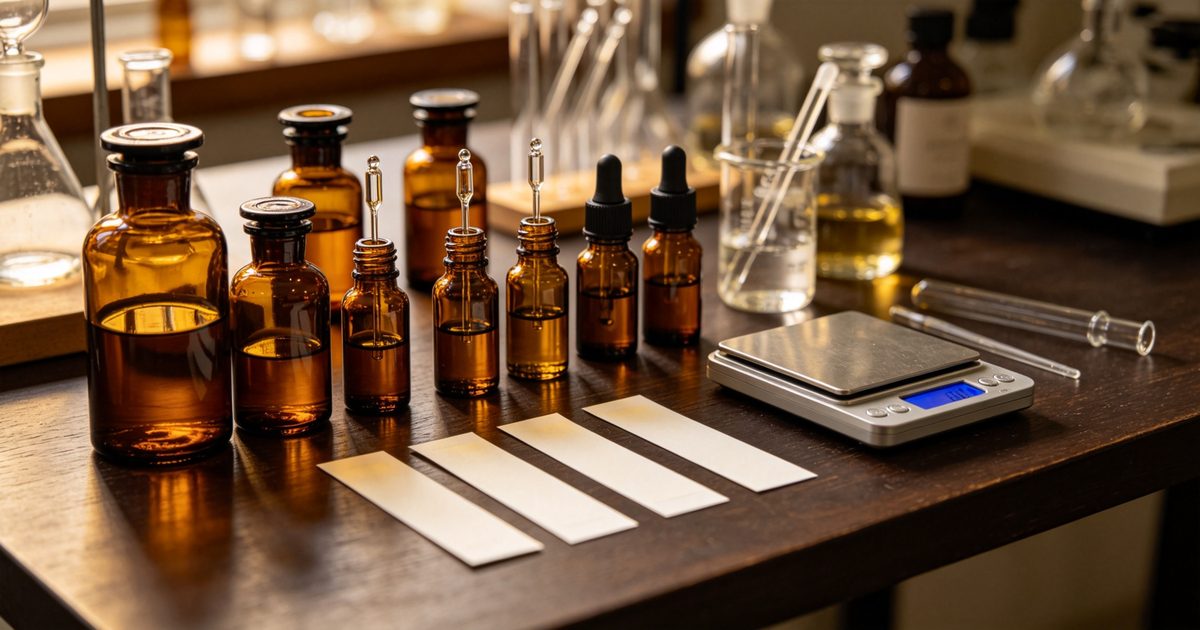
Some ingredients shout. Hedione whispers — and somehow the whole room hears it. This single molecule, born in a Swiss laboratory in the 1960s, quietly rewrote what "fresh" means in perfumery. Today it appears in such a large share of modern formulas that many professionals half-joke it should be listed on the periodic table of perfumery.
What Is Hedione?
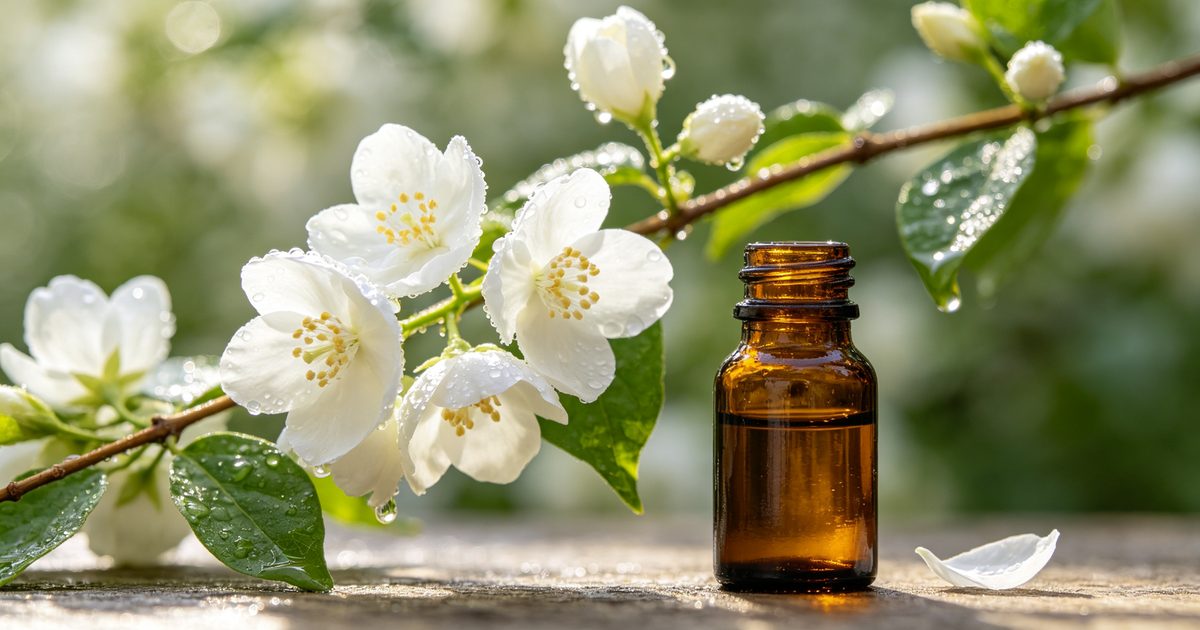
Hedione is the trade name for methyl dihydrojasmonate, a synthetic aroma chemical created at Firmenich in the early 1960s during research into the chemistry of jasmine absolute. It is related to methyl jasmonate — a molecule that occurs naturally in jasmine — but hedione itself is a lab-made material: a pale yellow liquid, produced at industrial scale.
Its smell is famously hard to pin down. Sniffed neat, hedione is a soft, translucent jasmine-magnolia freshness with citrusy, almost tea-like facets — and it strikes many people as oddly quiet. That is the point. Hedione's gift is not its own voice but what it does to others: it adds radiance, space, and diffusion, as if someone opened a window inside the formula. Perfumers describe it as "turning on the light."
Its breakthrough came in 1966, when Edmond Roudnitska built Dior's Eau Sauvage around it — a landmark that proved a synthetic molecule could create a freshness no natural material could deliver alone.
How Perfumers Use Hedione
Hedione sits in the heart of a composition, acting as a modifier and bridge rather than a featured note. Its main jobs:
- Lifting florals — it makes jasmine, rose, muguet, and orange blossom feel airy instead of heavy.
- Bridging top to heart — it carries citrus openings, like bergamot, gracefully into the floral middle of a perfume.
- Adding diffusion — formulas with hedione project further and feel more "alive" in the air around the wearer.
- Creating transparency — it thins out dense oriental or woody structures without watering them down.
Typical dosage: the classic working range is about 2–20% of the concentrate, with fresh florals often at the high end and some modern jasmine-style compositions pushing well beyond 20%. Because hedione is gentle and forgiving, it is one of the safest molecules for beginners to experiment with generously — a rarity in a craft where most materials punish heavy hands. See our beginner's formulation guide for structured exercises.
Safety & IFRA
Hedione has one of the most favorable profiles among widely used aroma chemicals, which is part of why the industry adopted it so completely. Even so, the professional rule never changes: IFRA evaluates materials within product categories — leave-on, rinse-off, and non-skin applications are assessed differently, and requirements can shift between amendments.
So the working habit stands: consult the current IFRA Standards and your supplier's documentation. Request the IFRA conformity certificate and SDS with every purchase, keep them organized by material, and verify your finished formula against the category you are actually making — a candle and a skin perfume play by different rules. Our supplier guide covers sourcing aroma chemicals with proper paperwork.
Hedione (Methyl Dihydrojasmonate)
The single best first aroma chemical for a home lab — forgiving, versatile, and instantly educational. Buy from sellers who provide purity data and an IFRA certificate, and dilute to 10% in DPG for easy dosing.
Blending Tips
- Jasmine absolute and white florals — hedione's home turf; it stretches expensive naturals and adds air.
- Citrus top notes — bergamot, lemon, and grapefruit stay sparkling longer with hedione underneath.
- Tea accords — the transparent freshness behind modern white-tea and spa-style scents, like those in our hotel scent dupes guide.
- Iso E Super and ambroxan — the holy trinity of modern transparent woody-florals.
- Clean musks — softens the drydown into a second-skin finish.
- Sandalwood — milky wood plus airy jasmine: a signature of contemporary niche perfumery.
Beginner exercise: take any simple floral blend, split it in two, and add 10% hedione to one half. Compare on blotters after one hour — the difference in lift and diffusion teaches more than any textbook chapter.
Frequently Asked Questions
Is hedione a natural or synthetic material?
Hedione is fully synthetic. It was created at Firmenich in the early 1960s during research into the chemistry of jasmine absolute. It is related to, but not identical to, methyl jasmonate — a molecule that does occur naturally in jasmine flowers.
Why can some people barely smell hedione?
Hedione has a low odor intensity and works mainly as a modifier. Its contribution is perceived as lift, space, and diffusion in the whole composition rather than as a distinct note, so evaluators smelling it neat often find it faint or oddly quiet.
Which famous perfumes use hedione?
The landmark is Dior's Eau Sauvage (1966), where Edmond Roudnitska used it to create a new kind of transparent freshness. Since then hedione has appeared in a huge share of modern fragrances across every genre, from citrus colognes to white florals.
How much hedione should a beginner use?
Start around 2-5% of the concentrate and evaluate after the blend rests. In floral compositions, professionals routinely work between 2% and 20%, and some modern jasmine-style formulas push even higher.
The Bottom Line
Hedione is the rare ingredient that is both beginner-friendly and master-approved: cheap, forgiving, and transformative. Learn to hear its quiet lift and you will start recognizing it everywhere — from designer bestsellers to the most expensive niche bottles on the counter. Keep exploring in our Ingredient Encyclopedia, or see how these molecules become sellable products in how to start a perfume line.
Related Articles
This post may contain affiliate links. If you click and buy, we may earn a small commission at no extra cost to you.