Walk into a Westin and the first thing that hits you isn't the lobby design — it's the smell. That crisp, clean white tea aura is so distinctive that Westin literally sells a $78 reed diffuser so you can take it home. Seventy-eight dollars for 133 milliliters. Do the math and that's roughly $600 a liter.
Here's the thing nobody at the hotel front desk will tell you: scent profiles aren't secret formulas locked in a vault. They're carefully engineered blends of widely available aroma chemicals. Which means you can get 90% of the same atmosphere for a fraction of the price — if you know what to buy and where to buy it.
I've spent the last few months testing hotel scent dupes across Amazon and AliExpress, running them through cold-air diffusers in my living room, and comparing notes against actual hotel stays. This guide is what I wish I'd had before I wasted money on three bottles that smelled like cleaning products.
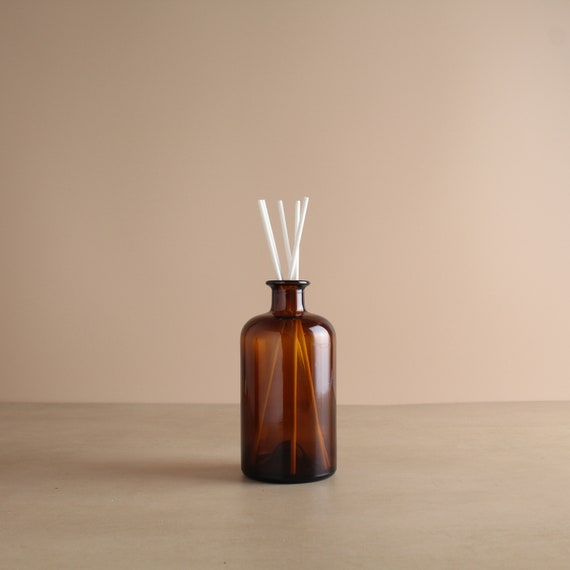
A classic amber-glass reed diffuser. The official hotel versions smell great — they also cost more per milliliter than some perfumes.
Hotels don't just light a candle. They use commercial cold-air nebulizing diffusers — machines that blast fragrance oil into microscopic dry particles using compressed air. No water, no heat, no dilution. The scent hangs in the air evenly and never feels heavy or cloying.
The official hotel home products (reed diffusers, candles, plug-ins) are a different story. They're licensed merchandise, manufactured by third parties and marked up because the hotel logo is on the bottle. A Westin White Tea reed diffuser at $78/133ml works out to about $586 per liter. A comparable dupe fragrance oil on AliExpress runs $17–30 for 500ml — that's $34–60 per liter. Same scent family, roughly one-tenth the price.
Before you start shopping, know what you're chasing. These are the four most searched hotel scent profiles in the US market right now:
The biggest name in hotel scents, and for good reason. It's built around a white tea accord — bright bergamot on top, a soft tea-floral heart, and a gentle cedarwood-musk base. It smells like freshly laundered linen in a sunlit spa. Clean, airy, never sweet. This is the safest blind buy if you're not sure which direction to go.
Warmer and more substantial than Westin. The Ritz-Carlton signature leans into an oriental-woody profile — cedarwood, amber, and a whisper of sweet florals. It feels expensive in a traditional, old-money kind of way. Better for living rooms and studies than bathrooms.
A marine-fougère profile — citrus and green leaves over a light woody base. It's the most "neutral" of the bunch: fresh, clean, modern, and unlikely to offend anyone. If you want a hotel smell without committing to a strong personality, Hilton is your pick.
An oriental-floral profile with sandalwood, jasmine, and a touch of vanilla. Richer and warmer than Westin, with more depth. It's the most "luxury resort" of the four — think spa in Bali rather than business hotel in Chicago.
| Hotel Scent | Profile | Vibe | Best Room |
|---|---|---|---|
| Westin White Tea | Tea + bergamot + cedar-musk | Clean, airy, spa-like | Living room, bedroom |
| Ritz-Carlton | Cedar + amber + floral | Warm, traditional, substantial | Living room, study |
| Hilton | Citrus + green + marine | Fresh, neutral, modern | Any room, bathroom |
| Shangri-La | Sandalwood + jasmine + vanilla | Rich, warm, resort-like | Bedroom, spa area |
These are the only two platforms you need to consider for the US market. Here's how they compare, and what to buy on each.
Amazon is where you go when you want it in two days and you want the ability to return it if it smells wrong. The selection is smaller than AliExpress, but the quality floor is higher — Amazon's review system weeds out the worst offenders, and Prime shipping means you're not waiting three weeks for a bottle from Shenzhen.
The standout brand on Amazon right now is AirScent. Their "Hotel Diffuser Oil" line uses numbered blends that map directly to hotel chains — No. 1008 is their Westin White Tea dupe, No. 1014 is a generic five-star coastal blend, No. 1023 is inspired by Baccarat Hotel. They come in sizes from 10ml (test size) up to 500ml, and the reviews are genuinely useful — multiple buyers confirm the Westin dupe is "99% accurate" according to frequent travelers.
Another solid option: Aroma Country's White Tea West. It's marketed as a "signature scent found in luxury hotels" and uses 100% natural essential oils. Pricier than AirScent but a good pick if you want a more natural formulation.
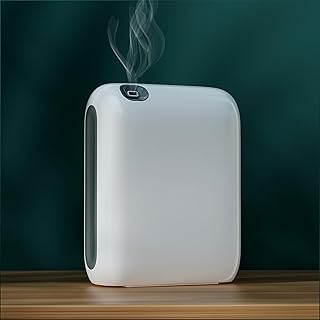
A plug-in waterless diffuser system. It works — just know that proprietary refill cartridges lock you into buying one brand's refills.
What to buy on Amazon: Start with a 10ml or 30ml test bottle of AirScent No. 1008 (Westin dupe) or No. 1014 (generic 5-star). If you like it, step up to the 120ml or 500ml size. Expect to pay $15–25 for 120ml and $35–55 for 500ml.
Search Hotel Scent Oils on AmazonAliExpress is where the real deals are — and where the real risks live. A 500ml bottle of hotel-style fragrance oil can cost as little as $17. That's not a typo. The same volume on Amazon is $40–55. The catch is that quality varies wildly from seller to seller, and you can't return a bottle that smells like airport bathroom air freshener.
After testing six different AliExpress sellers, here's what separates the good ones from the bad:
The best AliExpress sellers I found are the ones that explicitly list their scent names as "Westin White Tea," "Hilton," "Shangri-La," "Ritz-Carlton" rather than vague "hotel collection" labels. These are typically factories in Guangzhou that supply commercial scent companies, and their formulations are surprisingly close to the originals. One seller's 500ml Westin White Tea oil ($22) was indistinguishable from the AirScent 120ml ($22) in my side-by-side test.
What to buy on AliExpress: Search for "Westin White Tea fragrance oil 500ml" or "Hilton hotel scent diffuser oil." Filter by store rating 4.7+. Buy a 100ml test bottle first ($5–8), then commit to 500ml ($17–30) if it passes the smell test.
Search Hotel Scent Oils on AliExpressBuying the right oil is only half the equation. Run it through the wrong device and you'll waste half the bottle and never get that hotel-lobby effect.
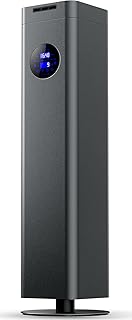
A tower-style cold-air nebulizing diffuser. This is the type of machine that actually delivers the hotel lobby experience at home.
This is what hotels use. A compressor pushes air through a narrow nozzle, creating a vacuum that pulls fragrance oil up and atomizes it into particles smaller than 5 microns. The mist is dry — no water vapor, no heat — so it hangs in the air and distributes evenly. The scent is present but never heavy.
For a standard US living room (300–500 sq ft), look for a machine with:
Price range: $60–150 on Amazon for a decent home unit. The BICEDO and Yander brands are consistently well-reviewed. Commercial/HVAC-connected units start at $200+ and are overkill for most homes.
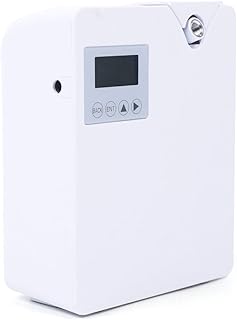
A WiFi-connected HVAC diffuser. Overkill for most homes, but if you have central air and want whole-house scenting, this is how to do it.
Ultrasonic diffusers — the ones that fill your room with visible white mist. They require water (5–8 drops of oil per 100ml water), which means the scent is diluted, soft, and gone in a few hours. Fine for a bedroom at bedtime, not fine for a hotel lobby experience. Also, oil-based fragrance oils can clog ultrasonic membranes — you need water-soluble oil for these, which is a different (weaker) product.
Reed diffusers — zero maintenance, but the scent radius is maybe 20 square feet. They're bathroom products, not living room products. The official Westin reed diffuser smells great but only if you're standing within arm's reach of it.
Candles — inconsistent throw, fire hazard, and the scent changes as the wax burns. A $30 hotel candle will give you 40 hours of weak scent. A $22 bottle of oil in a $80 diffuser will give you 3–6 months of consistent scent. Do the math.
Some brands slap "Hotel Collection" on a bottle and call it a day. That tells you nothing about the actual scent profile. Always look for the specific hotel name in the product title or description — "inspired by Westin White Tea" means something. "Luxury hotel blend" means nothing.
Oil-based fragrance oil in an ultrasonic diffuser = clogged membrane and weak scent. Water-soluble oil in a cold-air nebulizer = watery mist and no throw. Check the product label. If it says "for ultrasonic diffuser" or "water soluble," it's not for your cold-air machine. If it says "waterless," "nebulizing," "HVAC," or "cold air," you're good.
Your nose adapts. Run a diffuser continuously for a week and you'll stop smelling it entirely — but your guests will walk in and say "whoa, it smells like a hotel in here." Hotels scent intermittently for exactly this reason. Set a timer: 30 minutes on, 30 minutes off, or run it only during waking hours. You'll use 40–60% less oil and the scent will actually be noticeable to you.
I did this. Twice. Both times the scent was wrong and I was stuck with half a liter of oil that smelled like a cheap cleaning product. Always start with the smallest size — 10ml on Amazon, 100ml on AliExpress. If it's right, buy the big bottle. If it's wrong, you're out $5 instead of $25.
Not all fragrance oils are the same strength. A "premium" or "high concentration" oil might be 20–30% pure fragrance, while a standard one is 5–10%. The premium bottle costs more but you use less of it. For most home setups, 10% concentration is plenty. Save the pure stuff for commercial spaces over 1,000 sq ft.
Here's what I'm running right now, in case you want a concrete starting point:
Compare that to the official Westin plug-in diffuser system ($50 for the device, $20 per proprietary refill cartridge, each cartridge lasting about 30 days). That's $20/month in refills alone. My setup costs $3–4/month in oil. The diffuser paid for itself in four months.
If you want your home to smell like a luxury hotel without paying luxury prices:
Hotel scent is smart formulation, not sorcery. A $22 bottle of oil and an $80 machine gets you 90% of the five-star experience for a fraction of what the hotel store charges. The only thing you're missing is the bellhop.